(Finanz und Wirtschaft, May 1, 2026)
Why the promise of ‘abundance for all’ is a dangerous illusion
Scarcity defines human existence and cannot be overcome by either socialism or technology. On the origins of the state, power, and the failure of the utopia of equality.
Commentary by Robert Nef
Human beings have, with good reason, been defined as ‘imperfect beings’. Scarcity is the defining element of life, and the political-economic promise of definitive ‘abundance for all’ is a dangerous illusion which is, however, persistently and, in some cases, successfully propagated worldwide by ‘socialists of all parties’ and, increasingly, by technological utopians. As ‘beings of scarcity’ with high growth potential, humans have ultimately ‘subdued the earth’ over the course of millennia. In his work *Der Staat* (The State), first published in 1909 and only discussed academically after the Second World War, the sociologist and philosopher of history Franz Oppenheimer accurately described scarcity as the driving force behind the emergence of states.
According to Thomas Malthus’s theory (‘An Essay on the Principle of Population’, 1798), the history of humanity is the history of growing populations, which inevitably lead to the dilemma of the ‘distribution of people and space’. The increasing scarcity of cultivable habitats initially leads to migration and ultimately to war for ‘more living space’ for one’s own people at the expense of other populations.
Nomads and Settlers
In order to escape scarcity in the face of growing populations, people have, even in prehistoric times, chosen two opposing approaches. Some set out as nomads to find better living conditions, initially through migration and later through conquest. The nomads’ motto is: Anywhere is better than here. The settled peoples increased yields in their ancestral territory through organised cultivation and defended their land against intruders, following the motto: Nowhere is better than here. According to Franz Oppenheimer, presumably with reference to Malthus’s theory, states arose when successful, aggressive nomads or pirates conquered the territories of settled farmers and established and stabilised a system of rule there, in which the successful invaders permanently dominated the conquered settled people.
In North America, the colonisers encountered internally rivalising nomadic tribes, which facilitated the conquest. From this perspective, every political rule is the more or less refined stabilisation of a foreign rule, which has either come to be perceived as ‘normal’ over the centuries or has been successfully replaced by new conquerors.
Above all, the history of Asia, the Middle East and also Europe is a history of mass migration, marked by successful conquests and the subsequent stabilisation of political rule.
‘Socialist experiments have not eliminated poverty. This seductive utopia has so far foundered worldwide.’
Oppenheimer’s fundamental analysis of the emergence of the state as the victory of aggressive political means over peaceful economic means does indeed explain a great many developments, but not all of them. History also includes the peaceful settlement of uninhabited areas through cultivation and collective management on a cooperative basis (e.g. in early Switzerland as the Swiss Confederation) and successful secession as liberation from foreign political rule.
Alongside the definition of the state as a successful organisation of oppression, there is also the definition of the state as the guardian and protector of its citizens’ freedom. One might characterise the former as ‘realistically pessimistic’ and the latter as ‘idealistically optimistic’, but this is no cause for resignation among those who cherish freedom.
The danger that constitutional states may be gradually transformed into paternalistic states by majorities, even without external invasion, cannot, however, be dismissed; only in this case it is not nomads and pirates who are invading, but a new class of bureaucrats who are gradually building up and expanding their power at the expense of freedom and describing this as ‘social progress’.
Abundance for all
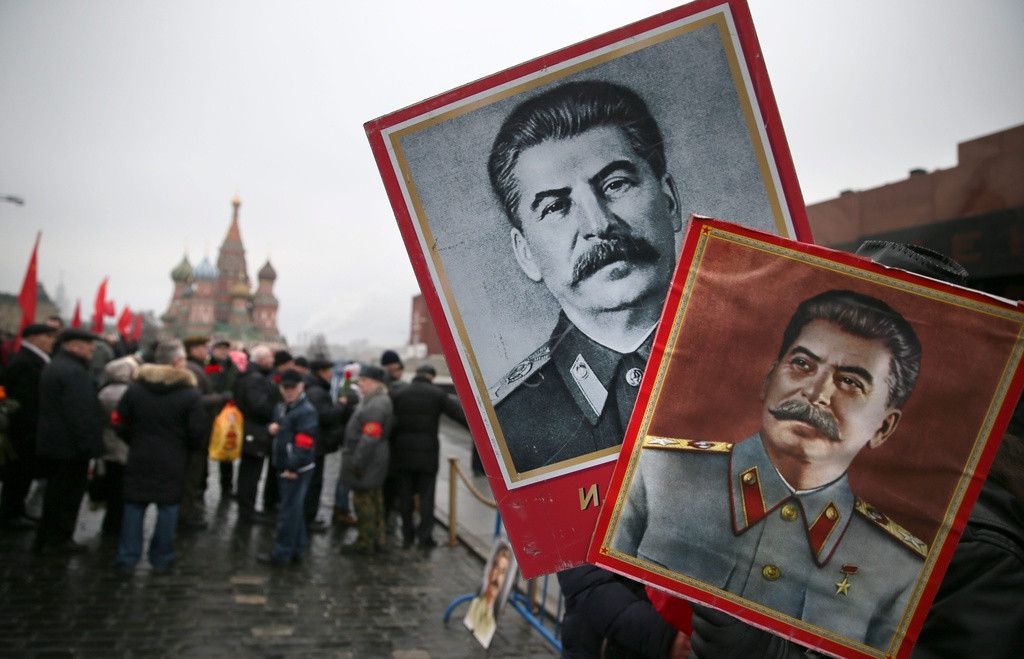
Overcoming scarcity in the sense of a definitive victory over all forms of poverty has been and remains the central theme of socialists and communists in every country. Following the abolition of the privileges of the nobility in the French Revolution, socialists of all shades have sought to replace the ‘privileges of the haves over the have-nots’ with a collectively organised distribution and redistribution of wealth, until such time as there could ultimately be a universal and equal sharing of the world’s material goods by all.
The shortages created in the past by unequal distribution of wealth and by exploitation were to be replaced worldwide, in accordance with the ideal of a ‘classless society’, by a collective administration of all goods. Technical progress, so goes the optimistic prognosis, would ultimately, following a victory in the class struggle, enable abundance for all and definitively overcome the previously unjustly managed and distributed scarcity. This seductive utopia has so far foundered worldwide. Socialist experiments have not eliminated poverty, and the political pioneers have established themselves in all socialist states to date as a new class, practising new hybrid forms of feudalism and state capitalism, some of which they still practise today.
However, the failure of the idea of equality and the impossibility of eliminating existing shortages through central planning are never blamed on the system itself, but rather on hostile powers and an internal opposition that is criminalised. The transformation of failed socialist experiments has led to centrally administered hybrid forms of market and state economies, in which the political leadership attempts to shift the blame for the system’s inherent problems onto some hostile state.
This experience has merely reinforced the understanding that a gradual return to state-organised capitalism can neither eliminate nor deny scarcity. For many, scarcity remains the cause of constant frustration and bitterness, because it never challenges everyone in the same way and resists centrally planned distribution and redistribution. This is why many people avoid reflecting on the origins of scarcity and still perceive it as a threat rather than an existential challenge. A positive approach to the phenomenon of scarcity is also hampered by a perceived technological threat. It concerns the fear that, in a working world increasingly driven by artificial intelligence, jobs might sooner or later run out because technology renders the use of human labour superfluous.
The fact is that industrial society, in which vast numbers of people operated machines in factories, is being replaced by a world of work centred primarily on services that concern relationships between people, and between people and their surroundings and environment.
There will always be demand for meaningful services and offerings in a changing world characterised by the division of labour and global interconnectedness. The true, the beautiful, the good, the healthy and the beneficial will always remain in short supply alongside the immediately necessary.